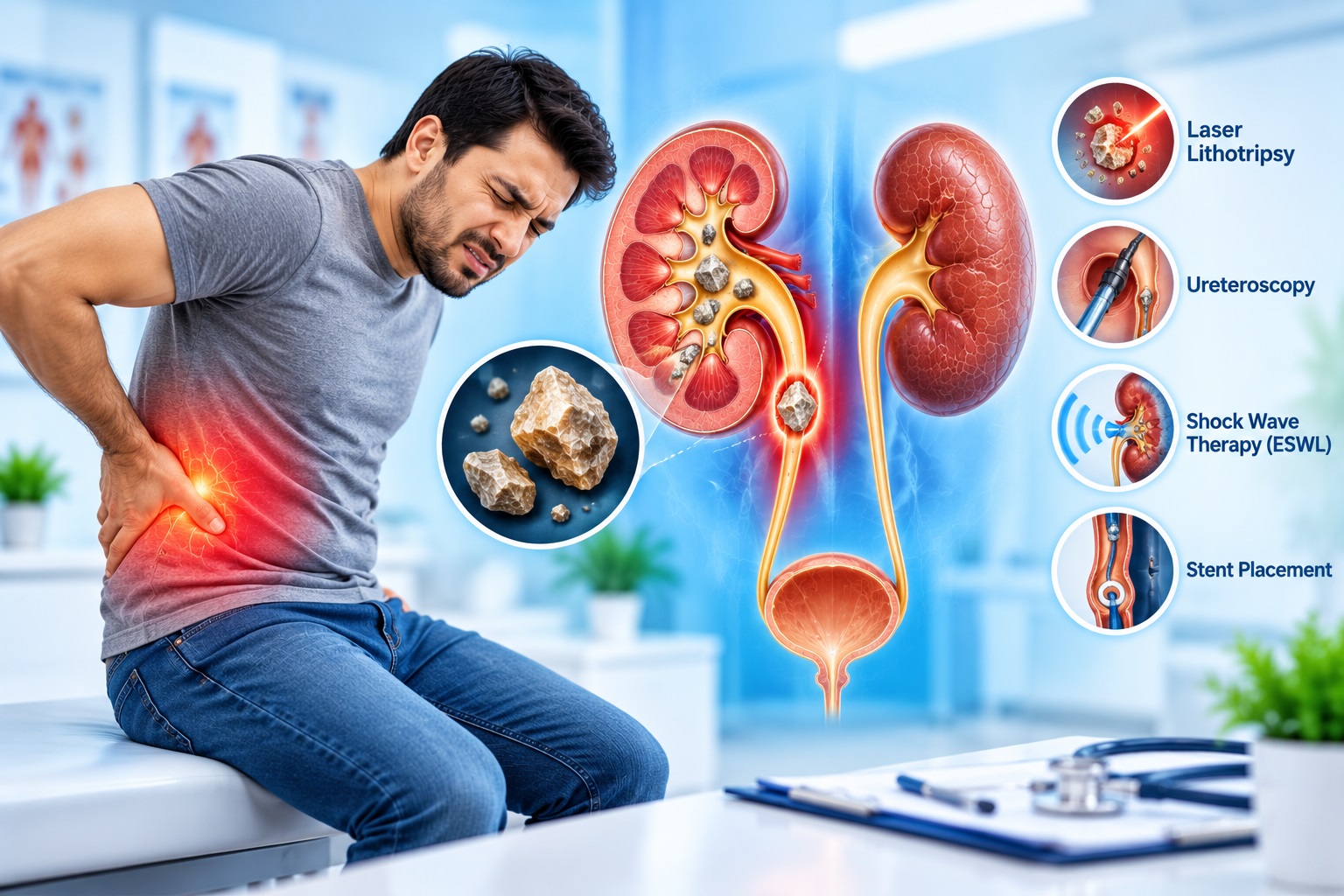
Kidney stones, also called renal calculi or nephrolithiasis, can develop in one or both kidneys. Their size, location and composition can influence the symptoms they cause and the treatment a urologist recommends.
Some stones pass naturally, while larger stones, stones causing obstruction, persistent pain or other complications may require active treatment. The appropriate approach should be decided after clinical assessment and relevant imaging or laboratory evaluation.
Symptoms of Kidney Stones
A small kidney stone may cause little or no discomfort. Symptoms can occur when a stone moves through the urinary tract or obstructs urine flow.
Sharp Pain
Severe or sharp pain may occur in the back, side, lower abdomen or groin. The pain may come and go in waves.
Blood in Urine
Urine may appear pink, red or brown when blood is present.
Urinary Symptoms
You may experience frequent urination, pain while urinating, or difficulty passing urine.
Nausea or Vomiting
Kidney-stone pain can be accompanied by nausea or vomiting.
Fever, chills, inability to urinate, severe pain, persistent vomiting or blood in the urine should be assessed promptly by a healthcare professional.
What Causes Kidney Stones?
Kidney stones form when urine contains high concentrations of substances that can crystallize. Calcium, oxalate and phosphorus are among the substances associated with stone formation.
The exact risk factors differ from person to person. Previous stones, dietary factors, low urine volume and certain medical conditions can contribute to stone formation.
Not producing enough urine can make stone-forming substances more concentrated.
High sodium intake and certain dietary patterns can increase stone risk in susceptible people.
People who have formed a stone may be at risk of forming another one.
Some health conditions can alter mineral levels in the urine and increase stone risk.
How Are Kidney Stones Diagnosed?
A urologist considers your symptoms and medical history and may recommend tests to confirm the diagnosis, identify the stone's location and assess factors that may have contributed to stone formation.
Clinical Assessment
Symptoms, medical history and physical examination help guide evaluation.
Urine & Blood Tests
Laboratory tests may help identify blood, infection or metabolic factors.
Imaging
Imaging can help determine the stone's size, number and location.
Stone Analysis
If a stone is passed or removed, analysis can help identify its composition.
Kidney Stone Treatment Options
Treatment depends on factors such as stone size, location, composition, symptoms and whether urine flow is blocked. Some small stones may pass without a procedure, while larger or problematic stones may require removal or fragmentation.
Observation & Medical Management
Selected small stones may be managed conservatively with appropriate fluids, symptom control and follow-up as advised by a healthcare professional.
Shock Wave Lithotripsy (ESWL)
Shock waves are used to break a kidney stone into smaller pieces that can pass through the urinary tract.
Ureteroscopy & Laser Treatment
A thin scope is passed through the urinary tract to locate the stone. The stone may be removed or fragmented, including with laser energy when appropriate.
Percutaneous Nephrolithotomy
For selected larger kidney stones, a nephroscope can be inserted through a small opening in the back to remove or fragment the stone.
Ureteral Stent
In selected situations, a temporary ureteral stent may be placed to help maintain urine flow or support drainage after treatment.
Personalised Treatment Plan
Your urologist can recommend the most suitable option after evaluating the stone's size, location, symptoms and your overall health.
How to Prevent Kidney Stones
Prevention is not identical for everyone. Knowing the type of stone and, when appropriate, evaluating urine chemistry can help guide dietary and lifestyle changes.
Stay Adequately Hydrated
Drinking enough fluid, mainly water, helps dilute urine and is an important part of prevention for many people.
Reduce Excess Sodium
High sodium intake can increase calcium in the urine and may raise the risk of certain kidney stones.
Review Your Diet
Depending on the stone type, a clinician may recommend changes involving sodium, animal protein, calcium or oxalate.
Follow Medical Advice
Recurrent stone formers may benefit from metabolic evaluation, urine testing and preventive medicines when appropriate.
Important: Do not follow a restrictive “kidney stone diet” without knowing your stone type or discussing your individual needs with a healthcare professional. People with kidney failure or other conditions may have different fluid and dietary requirements.
When Should You Seek Urgent Medical Care?
Kidney-stone symptoms can overlap with other urinary or abdominal conditions. Prompt assessment is especially important if symptoms are severe or associated with possible infection or urinary obstruction.
- Severe or worsening pain
- Fever or chills
- Repeated vomiting or dehydration
- Inability or difficulty passing urine
- Visible blood in the urine
- Symptoms that are persistent or getting worse
Get Expert Evaluation for Kidney Stones
If you have kidney-stone symptoms or recurrent stones, consult a qualified urologist for an appropriate evaluation and treatment plan.
Frequently Asked Questions
Can a kidney stone pass on its own?
Some small kidney stones can pass through the urinary tract without a procedure. Whether observation is appropriate depends on the stone and the person's symptoms and clinical situation.
What is the treatment for a large kidney stone?
Larger stones may require active treatment. Depending on size, location and other factors, options can include shock wave lithotripsy, ureteroscopy or percutaneous nephrolithotomy.
Is laser treatment used for kidney stones?
Yes. During ureteroscopy, a urologist may use laser energy to fragment a stone so that it can be removed or passed, when this approach is appropriate.
Can drinking water prevent kidney stones?
Adequate fluid intake, mainly water, is an important preventive measure for many people because it helps dilute urine. Individual fluid needs may differ if you have another medical condition.
Can kidney stones come back?
Yes. People who have had a kidney stone can develop another one. Identifying the stone type and addressing relevant risk factors can help reduce the chance of recurrence.
Medical Information & Disclaimer
This article is intended for general health education and should not replace a medical examination, diagnosis or personalised treatment plan. Treatment decisions should be made with a qualified healthcare professional.
General medical information for this article was checked against resources from the U.S. National Institute of Diabetes and Digestive and Kidney Diseases (NIDDK).