Mon - Sat: Morning - Evening Sunday: By appointment +91 90155 53810 dockaushalurologist@gmail.com
Book Appointment
Advanced Minimally Invasive Surgery

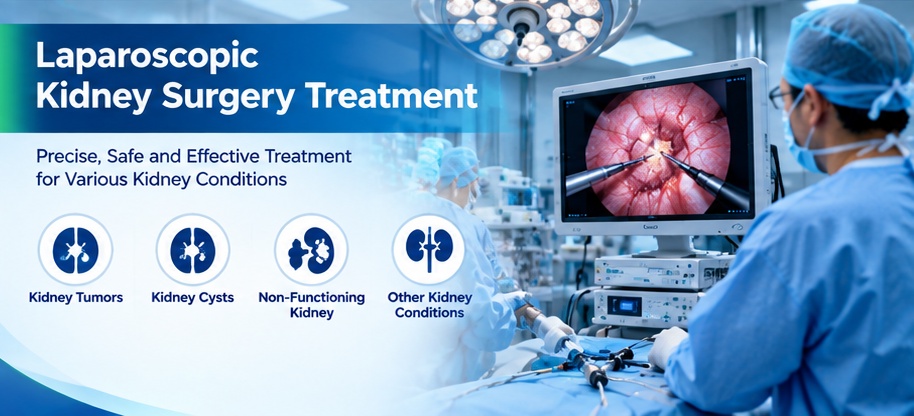
What Is Laparoscopic Kidney Surgery?

Laparoscopic kidney surgery is a minimally invasive surgical approach in which specialized instruments and a small camera are introduced through small abdominal incisions.

The camera provides magnified visualization of the surgical area, allowing the surgeon to perform selected kidney procedures through smaller access points than traditional open surgery.

Depending on the kidney condition, the operation may involve removing a kidney mass, treating a selected kidney cyst or performing another appropriate renal procedure.
Important: Laparoscopic surgery is not suitable for every kidney condition. The surgical approach depends on the diagnosis, size and location of the lesion, kidney function, previous surgery and overall health.
Patient-Focused Kidney Care

Potential Benefits of Laparoscopic Surgery

When laparoscopic surgery is appropriate, the minimally invasive approach can offer several potential advantages compared with conventional open surgery.

Smaller Incisions

The procedure is performed through small access points rather than a large traditional incision.

Magnified Visualization

A camera provides detailed visualization of the operative field during the procedure.

Recovery Support

Selected patients may experience a recovery pathway associated with minimally invasive surgery.

Individualized Planning

The surgical approach is selected according to the patient's diagnosis and clinical needs.

Laparoscopic Kidney Procedures

Common Laparoscopic Kidney Surgeries

Different laparoscopic procedures may be used depending on the kidney condition, imaging findings and treatment goals.

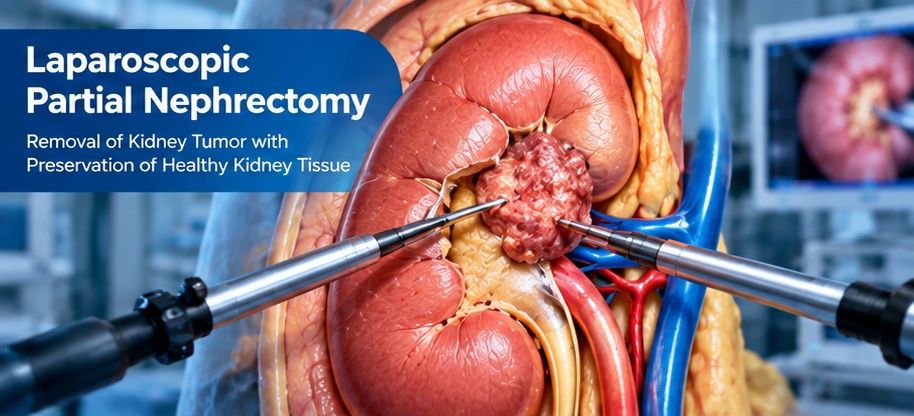
Laparoscopic partial nephrectomy for selected kidney tumors in Jaipur

Laparoscopic Partial Nephrectomy

A kidney-sparing operation used in selected patients to remove a kidney mass while preserving as much healthy kidney tissue as appropriate.

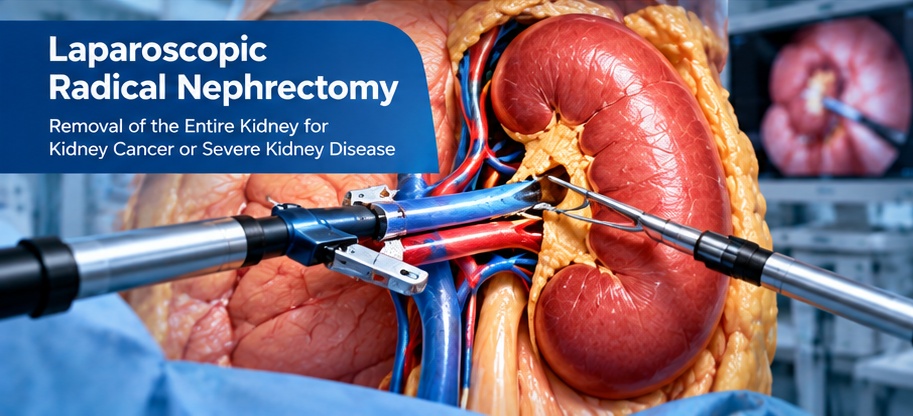
Laparoscopic radical nephrectomy kidney surgery in Jaipur

Laparoscopic Radical Nephrectomy

Removal of an entire kidney may be considered for selected kidney conditions when kidney-sparing surgery is not appropriate.

Laparoscopic kidney surgery treatment and minimally invasive renal surgery

Other Laparoscopic Renal Procedures

Selected kidney and upper urinary tract conditions may be treated using other laparoscopic or minimally invasive techniques.

Understand Your Surgery

How Laparoscopic Kidney Surgery Works

Understanding the typical treatment pathway can help patients prepare for consultation and surgery.

01

Preoperative Evaluation

Your symptoms, medical history, kidney function and imaging findings are reviewed to determine the most appropriate surgical approach.

02

Small Keyhole Incisions

Small access points are created in the abdomen so that a camera and specialized laparoscopic instruments can be introduced.

03

Camera-Assisted Surgery

The laparoscopic camera provides magnified visualization of the kidney and surrounding structures while the surgeon performs the planned procedure.

04

Recovery & Follow-up

After surgery, the medical team monitors recovery, kidney function and other relevant clinical parameters, followed by scheduled follow-up.

Please note: The exact operation, anesthesia, hospital stay, recovery period and follow-up requirements vary according to the kidney condition and individual patient factors.
Know the Kidney Condition

Conditions That May Require Kidney Surgery

Not every kidney problem requires surgery. A urologist evaluates the diagnosis, imaging, kidney function and overall health before recommending an intervention.

Kidney Masses

Selected renal masses may require surgery depending on their size, location, imaging characteristics and other clinical factors.

Kidney Cysts

Most kidney cysts do not require surgery, but selected symptomatic or complex cysts may require further evaluation and treatment.

Non-Functioning Kidney

In selected patients with a severely or non-functioning kidney, nephrectomy may be considered after appropriate evaluation.

Renal Tumors

Selected kidney tumors may be treated with partial or radical nephrectomy depending on tumor and patient factors.

Selected Renal Conditions

Certain reconstructive or other kidney procedures may also be performed laparoscopically in appropriate cases.

Individual Assessment

The final surgical plan depends on imaging, kidney function, previous operations and overall health.

Understanding Kidney Surgery

Partial vs Radical Nephrectomy

For selected kidney tumors and masses, the surgical approach may involve removing only the affected portion or the entire kidney.

Feature Partial Nephrectomy Radical Nephrectomy
What is removed? The kidney mass and a selected amount of surrounding tissue The entire affected kidney
Main objective Remove the target lesion while preserving appropriate healthy kidney tissue Remove the kidney when complete removal is considered appropriate
When considered? Selected kidney masses where kidney-sparing surgery is suitable Selected conditions where partial surgery is not appropriate
Decision factors Mass size, location, kidney function and patient factors Disease characteristics, kidney function and overall health
The choice between partial and radical nephrectomy is highly individualized. Your urologist will discuss the appropriate option after reviewing imaging and clinical findings.
Your Treatment Journey

What to Expect During Laparoscopic Kidney Surgery

The exact pathway varies by diagnosis and procedure, but these are common stages of care.

01

Consultation

Your symptoms, medical history, previous procedures and current medicines are reviewed.

02

Imaging & Diagnosis

Ultrasound, CT, MRI, blood tests or other investigations may be recommended according to the kidney condition.

03

Surgical Planning

The urologist evaluates the lesion, kidney function and overall health before recommending the surgical approach.

04

Laparoscopic Procedure

The planned operation is performed through small laparoscopic access points using a camera and instruments.

05

Hospital Recovery

The medical team monitors pain, mobility, urine output, kidney function and other relevant recovery parameters.

06

Follow-up

Follow-up may include review of recovery, pathology results when applicable and ongoing kidney care.

Before Surgery

How to Prepare

Preparation depends on the planned operation, anesthesia and your medical history.

  • Bring previous imaging and investigation reports
  • Tell the doctor about all medicines you take
  • Inform the medical team about allergies
  • Complete recommended blood and other investigations
  • Follow fasting instructions when required
Do not stop blood thinners or other prescribed medicines unless specifically instructed by your treating medical team.
After Surgery

Recovery & Aftercare

Recovery varies according to the type of kidney surgery, individual health and the complexity of the procedure.

  • Take prescribed medicines as directed
  • Follow wound-care and activity instructions
  • Maintain follow-up appointments
  • Follow advice regarding hydration and diet
  • Complete recommended kidney-function monitoring
Seek prompt medical attention for high fever or chills, severe or worsening pain, significant bleeding, breathing difficulty or other concerning symptoms.
Expert Urological Care

Why Choose Ekanshi Clinic?

Our approach focuses on careful diagnosis, appropriate surgical planning and clear guidance throughout the patient's treatment journey.

Expert Urological Care

Specialist-led evaluation and surgical planning for selected kidney conditions.

Minimally Invasive Approach

Laparoscopic techniques may be used when appropriate for the patient's diagnosis.

Personalized Planning

Surgical decisions are based on imaging, kidney function and individual patient factors.

Patient Guidance

Clear information about diagnosis, surgery, recovery and follow-up.

Patient Information

Frequently Asked Questions About Laparoscopic Kidney Surgery

Common questions patients may have before discussing kidney surgery with a urologist.

What is laparoscopic kidney surgery?
Laparoscopic kidney surgery is a minimally invasive surgical approach that uses a camera and specialized instruments through small abdominal incisions to perform selected kidney procedures.
What is a partial nephrectomy?
Partial nephrectomy is a kidney-sparing operation in which a selected kidney mass and surrounding tissue are removed while preserving as much appropriate healthy kidney tissue as possible.
What is a radical nephrectomy?
Radical nephrectomy involves removal of an entire kidney. It may be considered for selected kidney conditions when complete kidney removal is considered appropriate.
Is laparoscopic kidney surgery painful?
Pain and discomfort vary according to the operation, anesthesia and individual patient. The medical team will provide pain-management guidance during recovery.
How long does recovery take?
Recovery varies according to the type and complexity of kidney surgery and the patient's overall health. Your urologist will provide individualized recovery instructions.
Can every kidney tumor be treated laparoscopically?
No. The suitability of laparoscopic surgery depends on the size and location of the lesion, imaging findings, previous surgery, kidney function and other patient factors.
Can a kidney cyst require surgery?
Most kidney cysts do not require surgery. Selected cysts may need further evaluation or treatment depending on symptoms, complexity and imaging findings.
When should I consult a urologist?
Consult a qualified urologist if you have a diagnosed kidney mass or cyst, persistent blood in the urine, unexplained urinary symptoms, recurrent kidney problems or an abnormal kidney finding on imaging.
Laparoscopic kidney surgery treatment at Ekanshi Clinic Jaipur
Consult Our Expert

Get the Right Treatment for Your Kidney Condition

If you have a kidney mass, cyst or another condition that may require surgery, a detailed urological evaluation can help determine the most appropriate treatment approach.

Medical information: This page is intended for general patient education and does not replace consultation, diagnosis or treatment by a qualified medical professional. Treatment suitability, risks, recovery and outcomes vary from patient to patient.