Mon - Sat: Morning - Evening Sunday: By appointment +91 90155 53810 dockaushalurologist@gmail.com
Book Appointment
Advanced Prostate Treatment

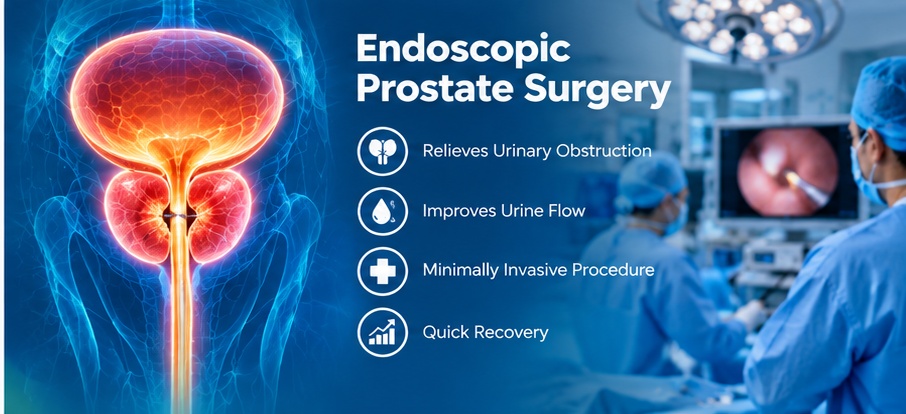
What Is Endoscopic Prostate Surgery?

Endoscopic prostate surgery uses specialized instruments and a small camera introduced through the urinary passage to treat selected prostate-related urinary obstruction without a large external surgical incision.

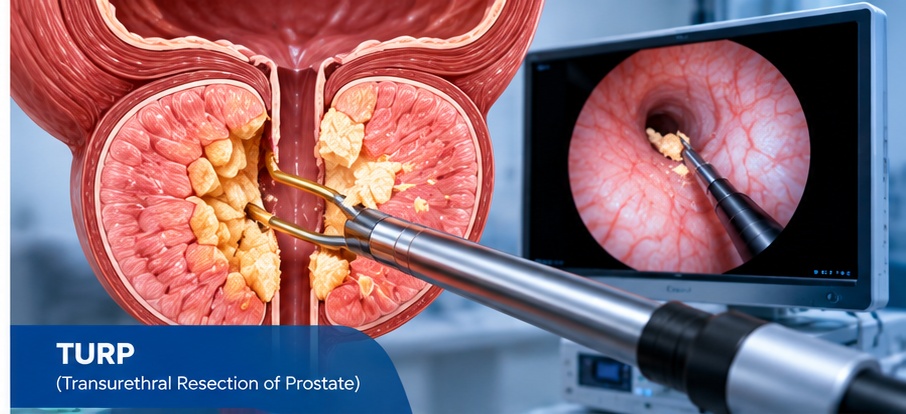
One commonly performed endoscopic procedure is TURP (Transurethral Resection of the Prostate), which removes obstructive prostate tissue in selected patients with benign prostate enlargement.

The appropriate treatment depends on prostate size, symptoms, urinary flow, bladder function, medical history, previous treatment and the overall clinical assessment.
Important: Not every man with an enlarged prostate needs surgery. Your urologist will first evaluate the symptoms and cause of urinary problems and discuss the most appropriate treatment options.
Patient-Focused Prostate Care

Why Consider Endoscopic Prostate Surgery?

When clinically appropriate, endoscopic surgery can provide a targeted approach to relieving urinary obstruction caused by selected prostate conditions.

Minimally Invasive Approach

Treatment is performed through the urinary passage without a large external incision.

Endoscopic Visualization

A camera allows the surgeon to visualize the urinary passage and prostate during the procedure.

Improved Urine Flow

In appropriately selected patients, removing obstructive tissue can improve urinary flow and emptying.

Individualized Care

Treatment decisions are based on symptoms, prostate findings and individual patient factors.

Endoscopic Prostate Procedures

Common Endoscopic Prostate Treatments

The exact procedure is selected after evaluating prostate size, urinary symptoms, bladder function and other clinical factors.

TURP endoscopic prostate surgery for enlarged prostate in Jaipur

TURP – Transurethral Resection of the Prostate

A well-established endoscopic procedure used in selected patients to remove prostate tissue that is obstructing urine flow.

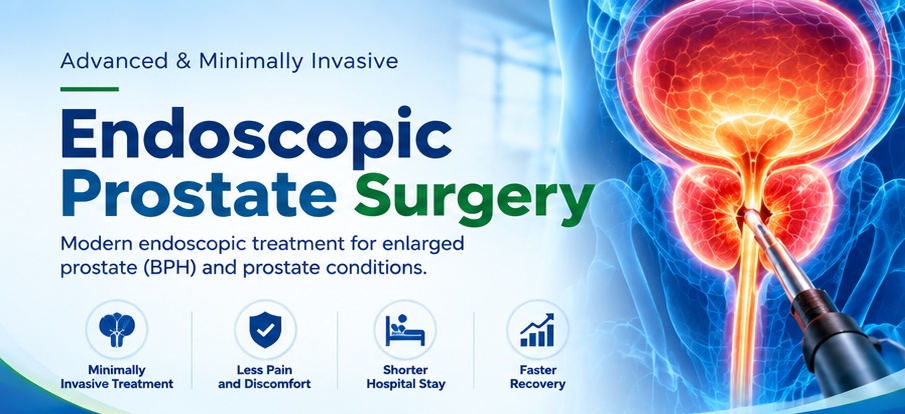
Endoscopic prostate surgery treatment in Jaipur

Endoscopic Prostate Surgery

Endoscopic techniques may be considered for selected patients with bothersome urinary obstruction related to benign prostate enlargement.

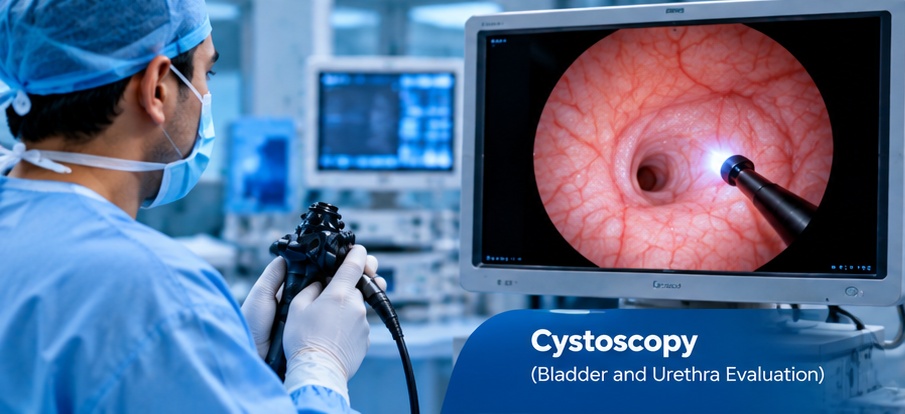
Cystoscopy evaluation of prostate and urinary tract in Jaipur

Cystoscopy & Urinary Tract Evaluation

Cystoscopy may be used to evaluate the urethra, prostate region and bladder when investigating selected urinary symptoms.

Understand Your Treatment

How Endoscopic Prostate Surgery Works

Understanding the treatment pathway can help patients prepare for their consultation and procedure.

01

Endoscopic Access

A specialized endoscope is introduced through the urinary passage to reach the prostate and bladder area without making a large external incision.

02

Visualization

A camera provides direct visualization of the urinary passage, prostate and bladder during the procedure.

03

Removal of Obstructive Tissue

During TURP or another appropriate procedure, selected obstructing prostate tissue is removed to improve the urinary channel.

04

Post-Procedure Monitoring

After surgery, the medical team monitors recovery and urinary function. A temporary catheter may be used depending on the procedure and clinical situation.

Please note: The procedure, anesthesia, catheter duration, hospital stay and recovery vary from patient to patient. Your urologist will explain your individual treatment plan.
Know the Symptoms

Common Symptoms of Enlarged Prostate (BPH)

Benign prostate enlargement can cause lower urinary tract symptoms. Persistent symptoms should be evaluated by a urologist.

Weak Urine Stream

Urine flow may become slower or weaker as the prostate narrows the urinary passage.

Difficulty Starting Urination

Some men experience hesitation or difficulty initiating the urine stream.

Frequent Urination

An increased need to urinate, particularly during the day or night, may occur.

Night-Time Urination

Repeatedly waking during the night to urinate can affect sleep and quality of life.

Incomplete Emptying

Some patients may feel that the bladder has not fully emptied after urination.

Urinary Retention

In more severe cases, prostate obstruction can contribute to difficulty or inability to pass urine.

Treatment Planning

Which BPH Treatment May Be Suitable?

Surgery is only one treatment option for BPH. The appropriate approach depends on symptoms, prostate findings and individual patient factors.

Situation Possible Approach What the Doctor Considers
Mild or manageable urinary symptoms Lifestyle measures / monitoring / medicines Severity, quality of life and clinical findings
Persistent symptoms despite medication Consideration of a procedural or surgical option Symptoms, prostate size, urinary flow and response to treatment
Significant urinary obstruction Endoscopic prostate surgery may be considered Degree of obstruction, bladder function and overall health
Urinary retention or recurrent complications Further urological evaluation and possible intervention Cause, recurrence, kidney/bladder function and medical history
The table is for general patient education. A consultation is needed to determine whether medicines, observation, endoscopic surgery or another treatment is appropriate.
Your Treatment Journey

What to Expect During Endoscopic Prostate Surgery

Your exact treatment pathway may vary, but these are common stages of care.

01

Consultation

Your urinary symptoms, medical history, medicines and previous treatments are reviewed.

02

Prostate Evaluation

Depending on your symptoms, evaluation may include urine tests, prostate assessment, ultrasound, flow testing or other investigations.

03

Treatment Discussion

The urologist explains medical and procedural options, including expected benefits and relevant risks.

04

Endoscopic Procedure

If surgery is appropriate, the selected endoscopic procedure is performed using suitable instruments.

05

Recovery & Monitoring

Urinary function and recovery are monitored. A temporary catheter may be used when clinically required.

06

Follow-up

Follow-up helps assess urinary symptoms, recovery and whether additional treatment or monitoring is needed.

Before Surgery

How to Prepare

Preparation depends on the planned procedure, anesthesia and your medical history.

  • Bring previous medical and investigation reports
  • Inform the doctor about all medicines you take
  • Discuss allergies and previous surgeries
  • Complete recommended blood, urine or imaging tests
  • Follow fasting instructions when required
Do not stop blood thinners or other prescribed medicines without instructions from your treating medical team.
After Surgery

Recovery & Aftercare

Recovery varies according to the procedure and the individual patient's health.

  • Take prescribed medicines as directed
  • Follow fluid and activity instructions
  • Follow catheter-care instructions if applicable
  • Attend scheduled follow-up appointments
  • Report concerning urinary symptoms promptly
Seek prompt medical attention for severe pain, high fever or chills, significant bleeding, inability to pass urine or other concerning symptoms.
Expert Urological Care

Why Choose Ekanshi Clinic?

Our approach focuses on accurate evaluation, appropriate treatment selection and clear guidance throughout your prostate-care journey.

Expert Urological Care

Specialist-led evaluation and treatment planning for prostate and urinary conditions.

Advanced Techniques

Modern endoscopic approaches when clinically appropriate for selected prostate conditions.

Personalized Treatment

Treatment recommendations based on symptoms, findings and individual patient needs.

Patient Guidance

Clear information about diagnosis, procedure, recovery and follow-up.

Patient Information

Frequently Asked Questions About Endoscopic Prostate Surgery

Common questions patients may have before discussing prostate surgery with a urologist.

What is endoscopic prostate surgery?
Endoscopic prostate surgery uses a specialized camera and instruments passed through the urinary passage to treat selected prostate-related urinary obstruction without a large external surgical incision.
What is TURP?
TURP stands for Transurethral Resection of the Prostate. It is an endoscopic procedure used in selected patients with benign prostate enlargement to remove obstructive prostate tissue.
Why might TURP be recommended for BPH?
TURP may be considered when prostate enlargement causes significant urinary obstruction or bothersome symptoms, particularly when other treatments have not provided adequate relief or when intervention is otherwise indicated.
Is endoscopic prostate surgery painful?
Pain and discomfort vary according to the procedure, anesthesia and individual patient. The treating team will explain the expected experience and pain-management plan.
Will I need a urinary catheter after surgery?
A temporary urinary catheter is commonly used after some endoscopic prostate procedures. The duration depends on the procedure and the patient's recovery.
How long does recovery take after TURP?
Recovery varies from patient to patient. Your urologist will provide specific instructions regarding activity, medicines, urinary symptoms and follow-up.
Does every enlarged prostate require surgery?
No. Treatment depends on symptom severity, prostate findings, urinary obstruction, bladder function, medical history and response to other treatments. Some patients may be managed with monitoring or medicines.
When should I consult a urologist?
Consult a qualified urologist if you have persistent weak urine flow, difficulty starting urination, frequent or night-time urination, incomplete bladder emptying, recurrent urinary problems or difficulty passing urine.
Endoscopic prostate surgery treatment for enlarged prostate at Ekanshi Clinic Jaipur
Consult Our Expert

Get the Right Treatment for Your Prostate Problem

If urinary symptoms are affecting your daily life or sleep, a urological evaluation can help identify the cause and determine whether medicines, monitoring or endoscopic treatment may be appropriate.

Medical information: This page is intended for general patient education and does not replace consultation, diagnosis or treatment by a qualified medical professional. Treatment suitability, risks, recovery and outcomes vary from patient to patient.